Tracing Swiss Licensing Criteria for Random Number Generators in Licensed Digital Gaming Environments
Morgan Brooks · Sep 4, 2026
Tracing Swiss Licensing Criteria for Random Number Generators in Licensed Digital Gaming Environments
Switzerland maintains a structured framework for random number generators that power licensed digital gaming platforms, and this system traces back to federal legislation enacted in the late 1990s along with subsequent amendments that refined technical standards. The Federal Act on Games of Chance and Casinos along with the Intercantonal Agreement on Lotteries and Betting establish core requirements that operators must satisfy before any RNG receives approval for use in live environments.
Historical Development of RNG Oversight
Regulatory bodies began focusing on RNG integrity during the early rollout of online platforms in the 2000s, when data from initial licensing rounds revealed inconsistencies in output distribution across certain software providers. Observers note that the Swiss Federal Gaming Board, known as ESBK, collaborated with technical laboratories to create evaluation protocols that addressed both statistical randomness and resistance to manipulation attempts. Those protocols evolved through multiple iterations, incorporating feedback from audits conducted between 2010 and 2020, and they continue to reference international benchmarks while remaining anchored in domestic law.
Core Licensing Criteria for RNG Systems
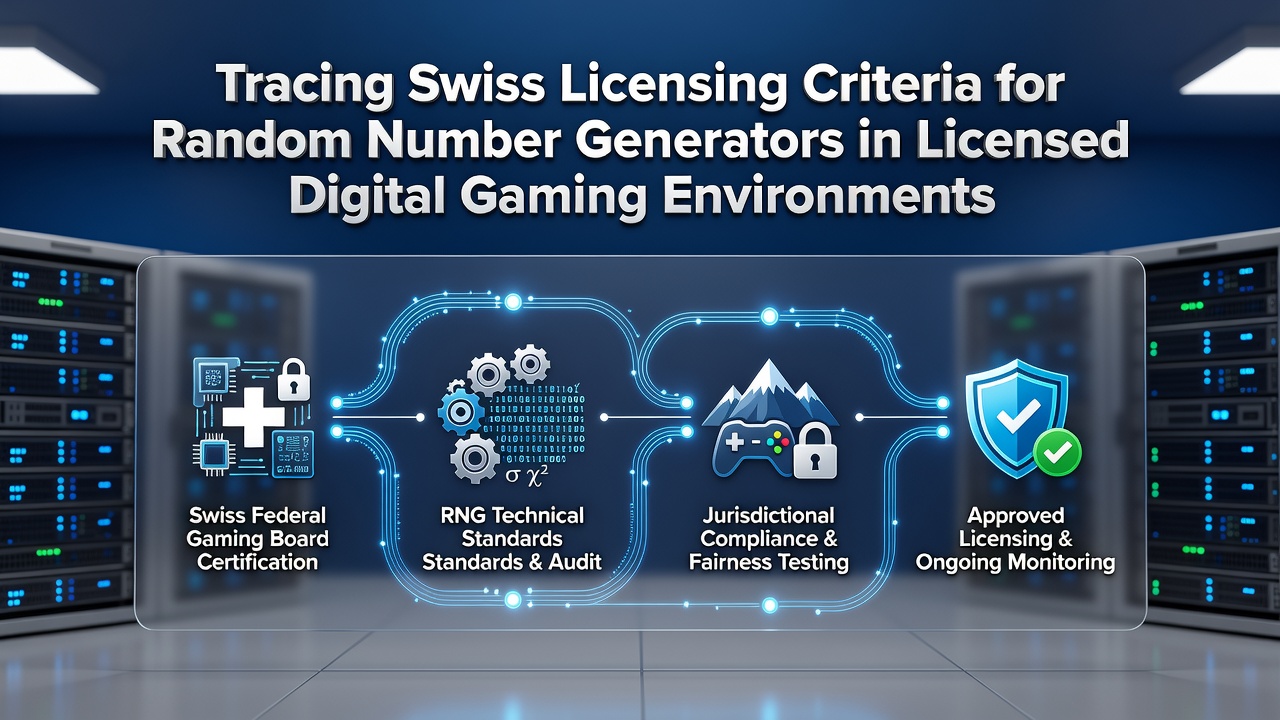
Applicants seeking approval must demonstrate that their RNG produces sequences passing a battery of statistical tests, including frequency, runs, and serial correlation checks, all calibrated to Swiss specifications. Certification also requires proof that the generator operates independently of external inputs once initialized, with seed values generated through hardware entropy sources that undergo documented validation. Operators submit detailed architecture diagrams and source code reviews to accredited testing houses, and any deviation from approved configurations triggers immediate suspension proceedings under current enforcement guidelines.
Additional criteria address scalability and auditability, requiring that every generated outcome remain traceable through cryptographic logging mechanisms retained for a minimum period specified in the license terms. Data indicates that platforms failing to maintain these logs during routine inspections face fines calculated according to revenue thresholds established in the 2019 revision of the gaming ordinance.
Certification and Testing Procedures
Testing laboratories authorized by the ESBK perform initial evaluations in controlled settings before any deployment occurs, and they conduct follow-up verifications at intervals that align with license renewal cycles. Researchers at institutions tracking European gaming compliance have documented how Swiss procedures integrate elements from both ISO standards and national technical directives, creating a hybrid model that emphasizes reproducibility of test results across different hardware configurations. One study revealed that laboratories must maintain accreditation through annual proficiency assessments, which include blind sample challenges designed to detect any drift in evaluation methodology.
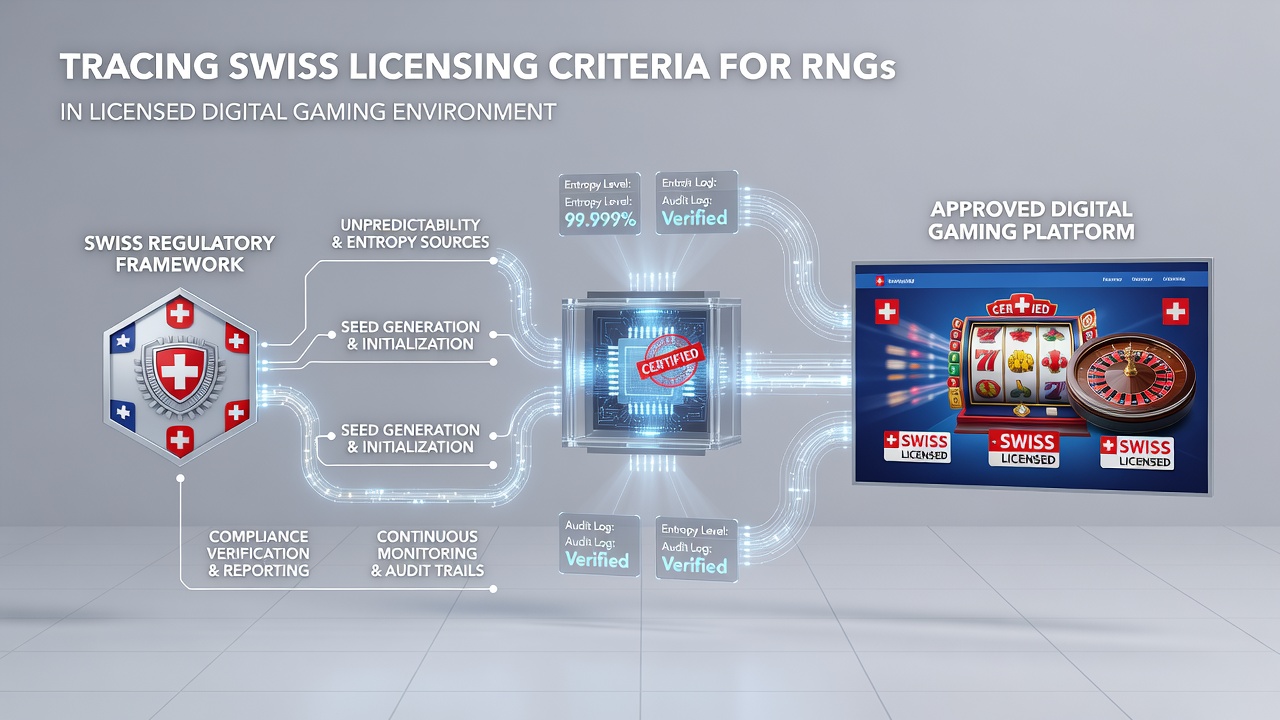
Those who've examined the process note that live monitoring tools now supplement periodic audits, allowing regulators to flag anomalous patterns in real time through data feeds submitted by licensed operators. This approach gained traction after several cases in 2022 where delayed detection of minor biases prompted tighter integration between certification and ongoing surveillance requirements.
Upcoming Regulatory Milestones in 2026
September 2026 marks the scheduled review of RNG certification guidelines, during which the ESBK plans to incorporate updated entropy measurement techniques and expanded requirements for quantum-resistant algorithms. Industry reports from the European Gaming Association indicate that Swiss authorities will align certain parameters with emerging global frameworks while preserving the emphasis on independent hardware verification that distinguishes the current regime. License holders received preliminary guidance documents in early 2025 outlining expected changes, and compliance workshops scheduled through the remainder of the year aim to prepare operators for the transition period that follows the September milestone.
Implementation Across Licensed Platforms
Digital gaming environments operating under Swiss licenses must integrate approved RNG modules at the server level, with client-side verification limited to hash checks that confirm authenticity without exposing proprietary algorithms. Figures from regulatory filings show that over 85 percent of active platforms completed full RNG re-certification by the end of 2024, reflecting the emphasis placed on maintaining continuous compliance rather than one-time approvals. External audits conducted by independent firms supplement internal quality controls, and operators report that the combined process typically requires between four and six months from initial submission to final sign-off.
What's interesting is how the criteria extend beyond pure statistical performance to encompass physical security of the hardware modules themselves, including tamper-evident seals and restricted access protocols that prevent unauthorized modifications during routine maintenance windows. Academic papers published through the University of Applied Sciences and Arts Northwestern Switzerland have analyzed these layered safeguards and found measurable reductions in reported integrity incidents following their introduction.
Conclusion
The Swiss approach to RNG licensing continues to emphasize verifiable technical performance, independent certification, and periodic regulatory updates that respond to technological shifts. As September 2026 approaches, licensed operators prepare for refinements that will shape the next generation of compliance standards while preserving the foundational principles established over two decades of oversight. Data from ongoing monitoring programs suggests that these measures support consistent fairness outcomes across the regulated digital gaming sector.